The Reality of Turf Temperatures in Las Vegas Summers
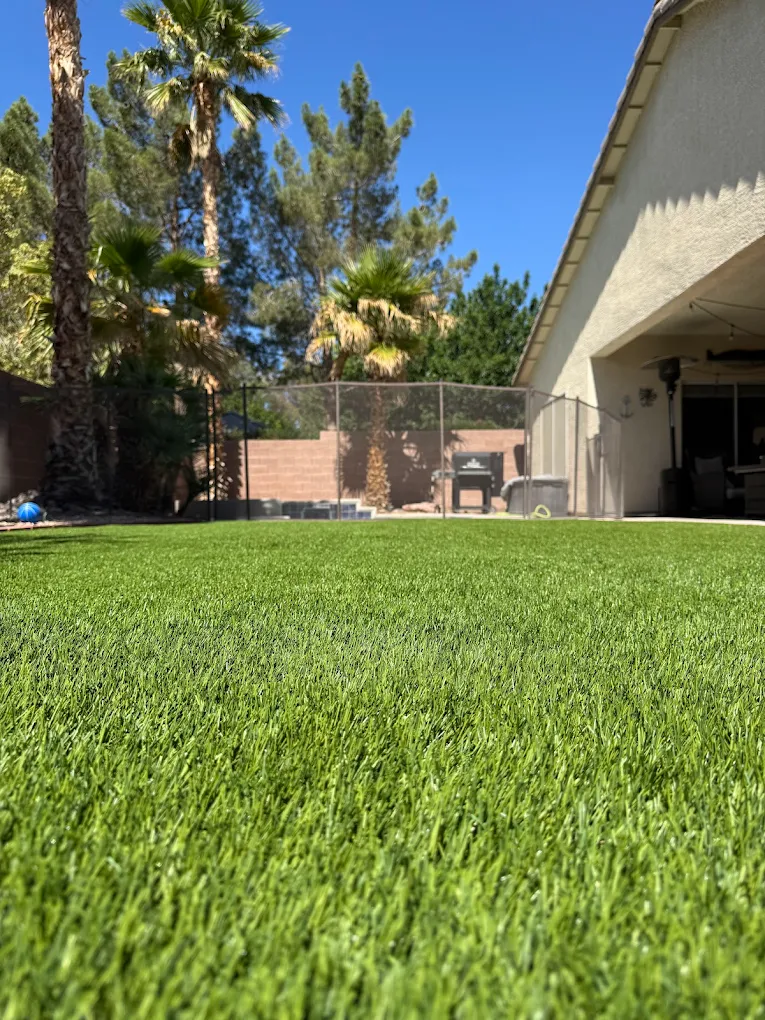
Artificial turf surface temperatures in Las Vegas routinely reach 150 to 170 degrees Fahrenheit during summer afternoons, and on the hottest days, surfaces in full sun can exceed 180 degrees. These temperatures make turf literally too hot to touch, let alone walk on barefoot. For families across Summerlin, Henderson, and Paradise, this extreme heat can render their outdoor spaces unusable for several hours each day from June through September without active cooling measures.
The temperature spike happens rapidly once direct sunlight hits the turf surface. On a typical July day when air temperature reaches 112 degrees, turf surfaces can climb from a morning reading of 85 degrees at 8 AM to over 140 degrees by 11 AM and peak around 165 degrees between 1 and 3 PM. This rapid heating means that even morning outdoor time requires awareness, and the window of comfortable barefoot use narrows significantly as summer progresses.
Understanding this heating pattern helps you plan your cooling strategy effectively. Rather than trying to keep turf cool all day, which is impractical and water-intensive, focus cooling efforts on the periods when you actually want to use the space. Most Las Vegas families find that cooling the turf before an evening barbecue or before children play in the late afternoon provides the best balance of comfort and resource efficiency.
Water-Based Cooling Methods
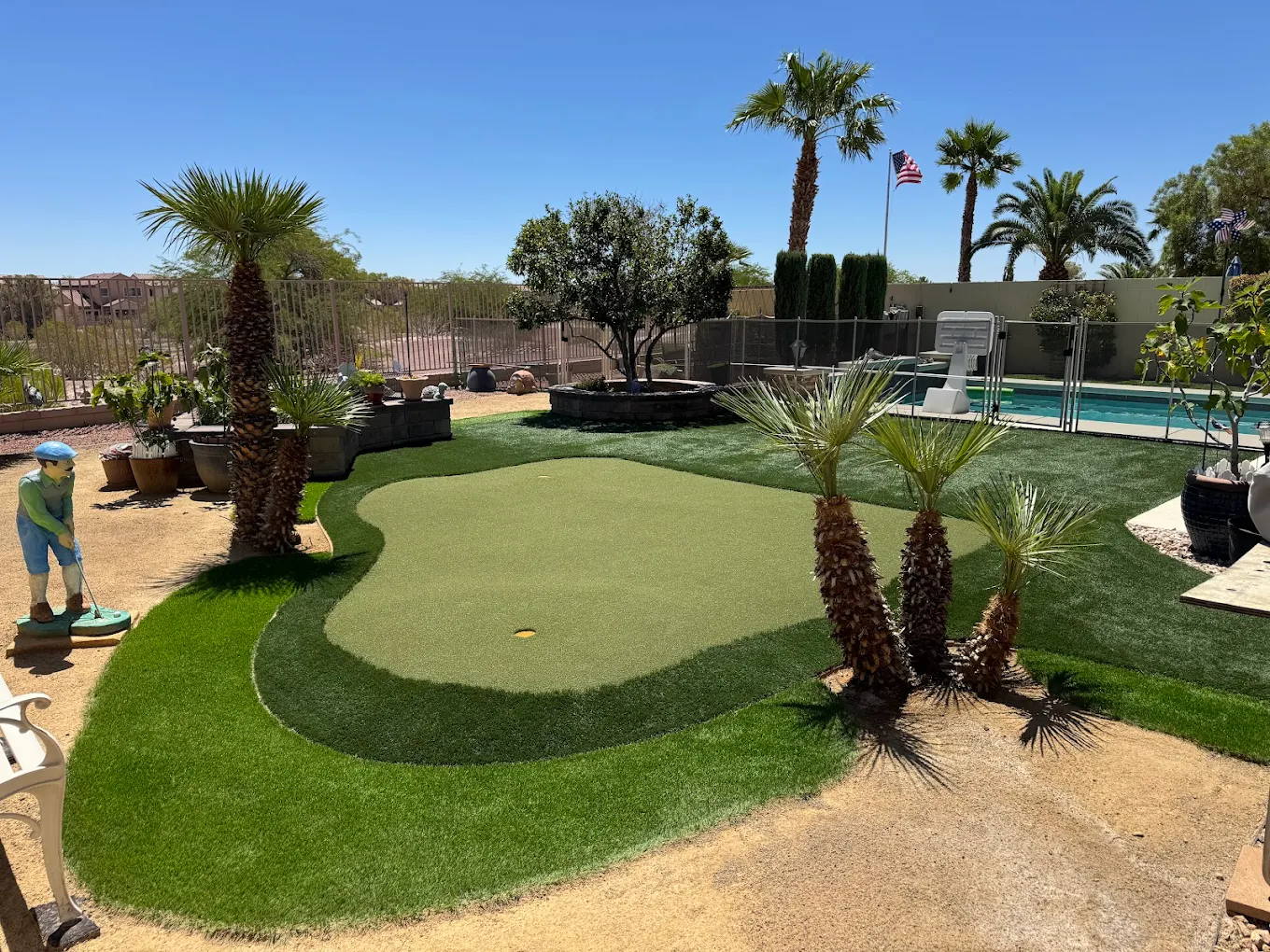
The simplest and most immediate way to cool artificial turf is a water rinse using your garden hose. A thorough hosing can drop turf surface temperature by 40 to 60 degrees in minutes, bringing a 165-degree surface down to a comfortable 105 to 120 degrees. The cooling effect lasts 30 to 60 minutes depending on ambient temperature and wind, which is enough time for kids to play or for an outdoor gathering setup in your Green Valley or Spring Valley backyard.
For homeowners concerned about water usage under SNWA guidelines, the amount of water needed to cool turf is minimal compared to irrigating natural grass. A typical 500-square-foot turf area requires roughly 15 to 20 gallons for an effective cool-down rinse, which amounts to less water than a five-minute shower. Strategic timing, such as rinsing just before planned outdoor use rather than on a fixed schedule, minimizes water consumption while maximizing comfort.
- Quick hose rinse: 2 to 3 minutes of spraying drops temperature 40 to 60 degrees instantly
- Misting systems: automated mist lines above turf provide periodic cooling throughout the day
- Sprinkler timer method: set a sprinkler for a 5-minute burst 30 minutes before planned use
- Drip line perimeter: low-flow perimeter irrigation provides gentle, continuous edge cooling
Keep a spray nozzle attached to your hose at all times during summer. A quick 2-minute rinse before stepping onto the turf saves your feet and makes the space immediately comfortable for the whole family.
Shade Structures That Make a Difference
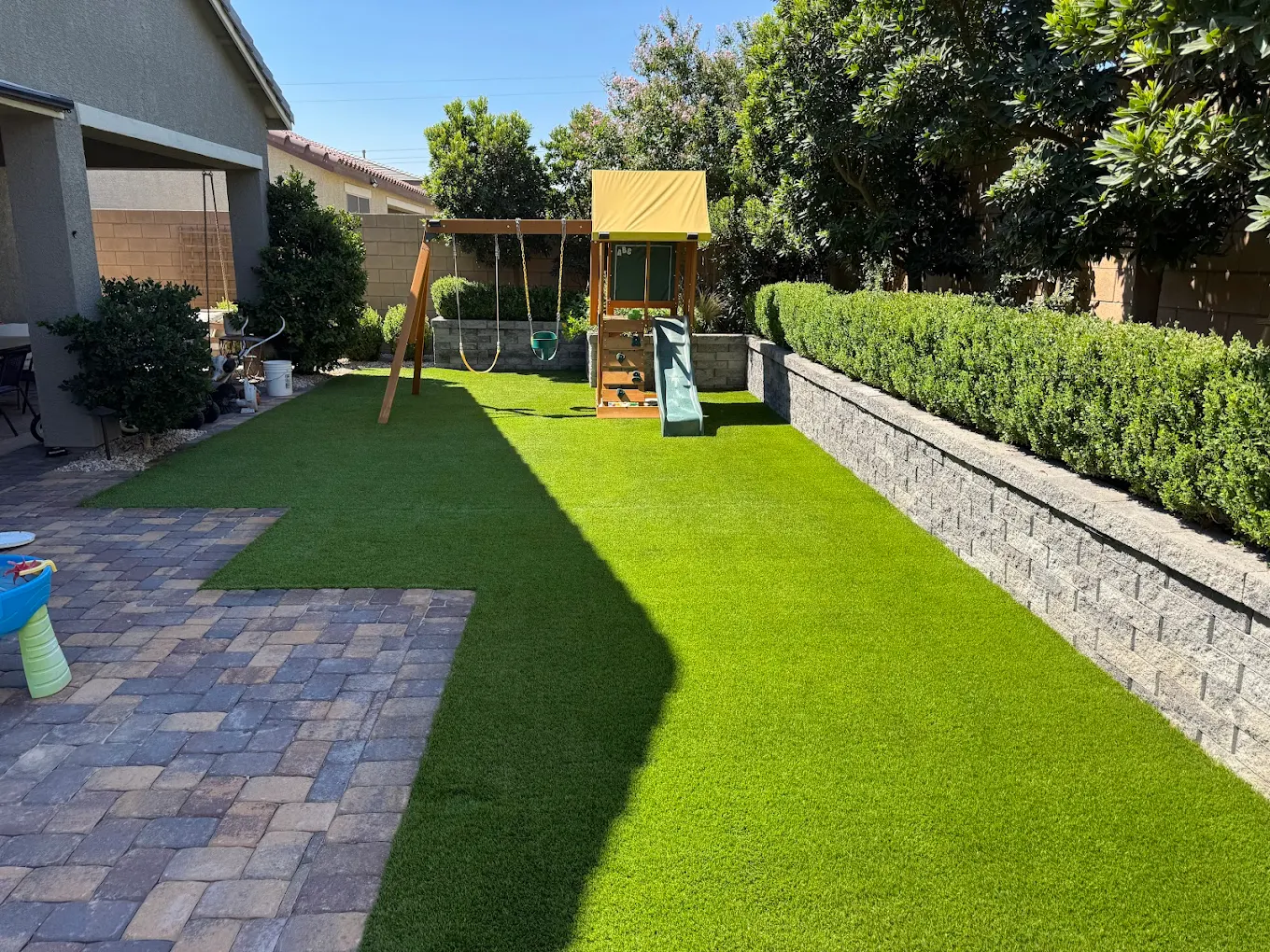
Permanent and temporary shade structures are the most effective long-term solution for managing turf temperatures in Las Vegas. A well-positioned shade sail or pergola can keep covered turf sections 30 to 50 degrees cooler than adjacent exposed areas, often making the difference between a usable and unusable outdoor space. Across Centennial Hills and Southern Highlands, retractable shade systems have become one of the most requested backyard upgrades precisely because of their impact on turf temperature.
The most effective shade strategy covers the turf area that receives afternoon sun from the west and south, as this is when temperatures peak. A shade structure that blocks sun from 12 PM to 5 PM covers the critical heat window and can reduce peak turf temperatures by 40 degrees or more. Even partial coverage helps; a shade sail covering 50 percent of your turf area creates a comfortable zone for activities while allowing the uncovered section to serve as a less-used buffer zone.
Desert-rated shade structures designed for Las Vegas wind loads and UV exposure are a worthwhile investment. Standard residential shade sails and pergolas from big-box stores often use materials that degrade quickly in the desert environment. Products rated for 100+ MPH winds and 10+ UV index conditions cost more upfront but last 10 to 15 years without replacement, matching the lifespan of your artificial turf installation.
Need Professional Turf Cleaning?
Get a free, no-obligation quote for your Las Vegas property. Same-day service available.
Cooling Infill Options for Desert Turf
The infill material beneath your turf fibers plays a major role in overall surface temperature. Traditional silica sand infill absorbs and retains heat efficiently, contributing to the extreme temperatures that make Las Vegas turf uncomfortable. Newer cooling infill products use materials with lower thermal conductivity and higher reflectivity to reduce the heat stored in the infill layer, which in turn keeps the entire turf surface cooler.
Acrylic-coated sand infill is one of the most popular cooling upgrades in the Las Vegas market. The acrylic coating reflects infrared radiation rather than absorbing it, resulting in surface temperatures 10 to 15 degrees lower than standard silica sand. For homeowners in North Las Vegas and Enterprise considering infill replacement, this relatively affordable upgrade provides noticeable comfort improvement without replacing the turf itself. Organic infill options made from coconut husk or cork also run cooler and add natural antimicrobial properties, though they require more frequent top-up due to gradual decomposition.
Creating a Cooler Microclimate Around Your Turf
The landscape surrounding your turf area significantly influences its temperature. Concrete block walls, exposed concrete patios, and dark-colored hardscape materials radiate stored heat back onto adjacent turf, raising temperatures even in partially shaded areas. Smart microclimate design uses lighter-colored hardscape materials, reflective wall coatings, and strategic plant placement to reduce the ambient heat load on your turf area in Henderson and Summerlin properties.
Trees and large shrubs planted on the south and west sides of turf areas serve as natural heat shields. Unlike man-made shade structures, trees also cool the air through evapotranspiration, creating a measurably cooler air column above the turf. Desert-adapted species like Chilean mesquite and blue palo verde provide excellent filtered shade without excessive water requirements. Homeowners across Boulder City and Paradise have found that a well-designed landscape plan combining shade trees, light-colored hardscape, and artificial turf creates an outdoor environment that remains comfortable well into late afternoon.
Planning Activities Around Turf Temperature Cycles
Understanding your turf's daily temperature cycle allows you to plan outdoor activities around the natural cool periods and prepare the surface for off-cycle use. In Las Vegas, turf is typically comfortable for barefoot use from October through April throughout the entire day. During summer months, the natural comfort window runs from about 6 AM to 9 AM and again from 7 PM to 10 PM, with the specific times shifting as days lengthen and shorten.
For midday and afternoon use during summer, plan to cool your turf 15 to 20 minutes before activities begin. This brief lead time allows the water to lower surface temperature and the initial thermal rebound to settle. Many Las Vegas families in Spring Valley and Green Valley develop a summer routine of hosing down the turf at 5 PM, which provides a comfortable surface for dinner prep and evening outdoor time through sunset.
If you host frequent outdoor gatherings during summer months, consider installing a programmable misting or sprinkler system on a timer that activates 20 minutes before your typical outdoor use time. This automated approach ensures consistently comfortable turf temperatures without requiring manual intervention. The water usage for a daily 5-minute misting cycle is minimal and well within SNWA conservation guidelines.
A simple infrared thermometer costs under $20 and lets you check turf surface temperature instantly. Keep one by your back door to quickly assess whether the turf is comfortable before heading outside barefoot.