Planning a Dog Run for Las Vegas Conditions
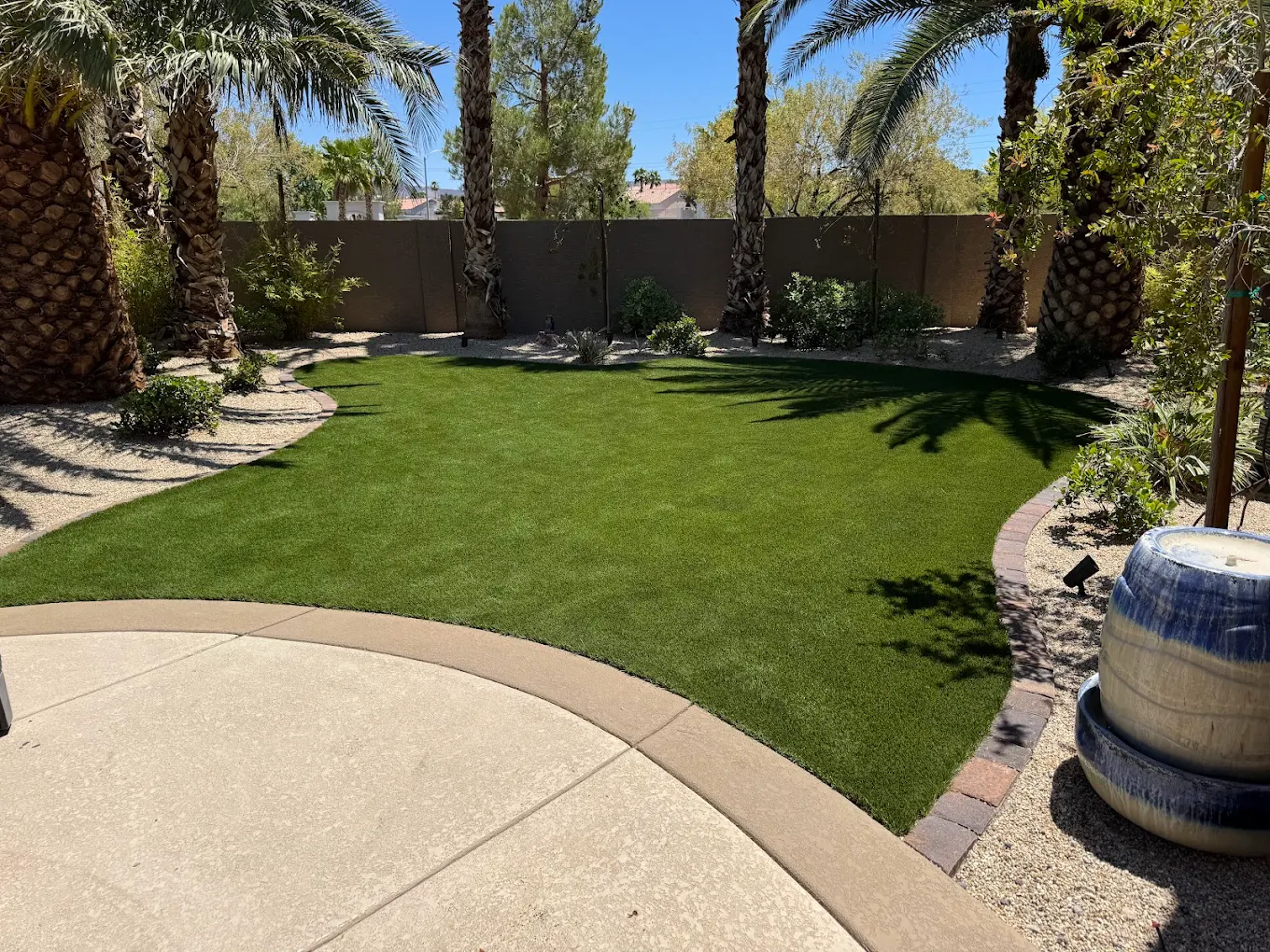
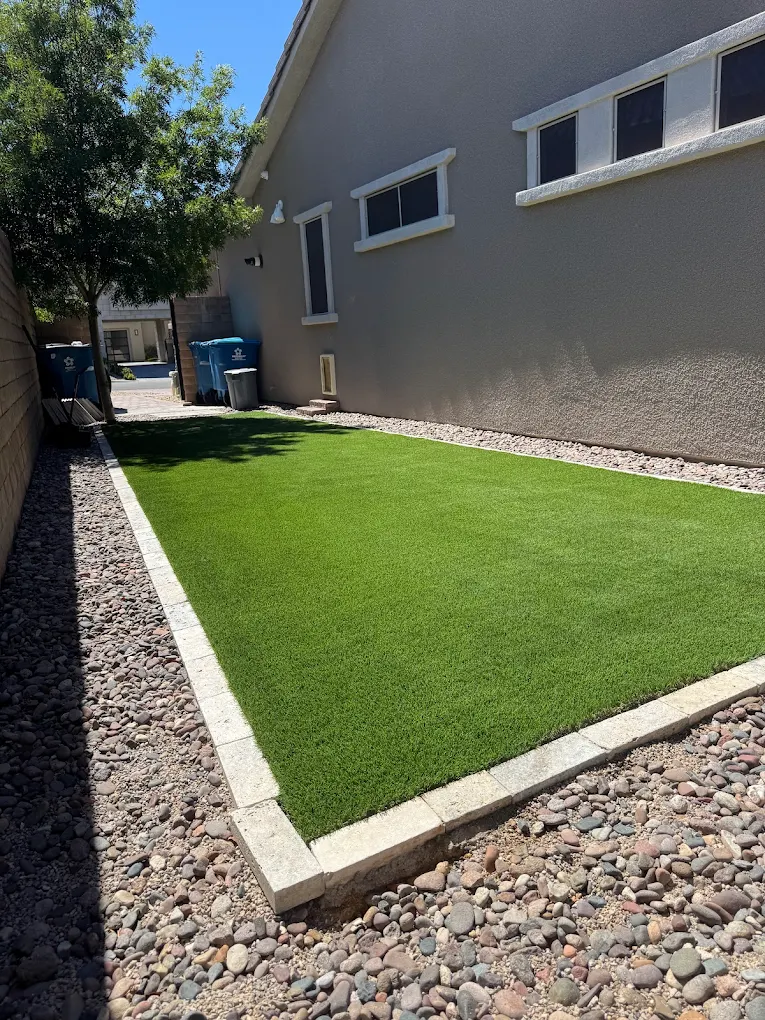
A dog run is a dedicated, enclosed outdoor space that gives your dog freedom to exercise, relieve themselves, and enjoy fresh air without full-yard access. In Las Vegas, dog runs are particularly popular among homeowners who want to protect their primary landscaping investment while still providing dogs with a quality outdoor experience. Side yards, which are common in Summerlin and Henderson floor plans, make ideal dog run locations because they're naturally separated from main living areas.
Planning your dog run starts with sizing. The minimum recommended size for a single medium-to-large dog is 4 feet wide by 10 feet long, though larger is always better for your dog's comfort and exercise needs. For multiple dogs, add at least 50 percent more space per additional dog. The width is more important than length for most daily activities, so a 6-by-12-foot run works better for exercise than a 3-by-24-foot run even though they have similar square footage.
Location within your property matters significantly in Las Vegas. Choose a spot that receives morning sun but afternoon shade, or plan to install shade structures. The east side of your home typically provides the best natural light pattern, with the house itself blocking the intense western afternoon sun. Avoid placing a dog run against a south-facing block wall, which absorbs and radiates heat for hours after direct sun exposure ends.
Ground Preparation and Drainage Systems
Proper ground preparation is the foundation of a successful dog run, and this step is especially critical in Las Vegas where the native soil composition creates drainage challenges. Most Las Vegas properties sit on caliche, a dense calcium carbonate layer that is essentially waterproof. Without adequate preparation, a dog run on caliche will pool urine and rinse water beneath the turf, creating odor problems that no amount of surface cleaning can resolve.
Excavate the dog run area to a depth of six to eight inches and remove all native soil. Line the excavation with landscape fabric to prevent weed growth, then fill with four to six inches of compacted crushed rock or decomposed granite. This aggregate base provides the drainage pathway that the native soil cannot. For runs longer than 10 feet, install a perforated drain pipe at the low end to channel collected liquid to a dry well or landscape drain.
Grade the sub-base at a 1 to 2 percent slope toward the drain point. In Spring Valley and Paradise installations, a French drain running along the low side of the dog run connects to the existing landscape drainage system. This ensures that urine and rinse water exit the area completely rather than accumulating beneath the turf surface where it becomes impossible to clean.
Never skip the drainage preparation on a dog run, even for small installations. Urine pooling beneath turf in Las Vegas heat creates severe odor problems that can only be fixed by removing the turf and starting over.
Selecting the Right Turf for a Dog Run
Dog run turf needs to be tougher, more permeable, and more hygiene-focused than standard residential turf. Choose a product with a drainage rate of at least 80 inches per hour, since a dog run concentrates all of your dog's waste in a fraction of the total yard area. Short pile height of 1 to 1.25 inches keeps the surface easy to clean and prevents waste from hiding deep in longer fibers.
Perforated or flow-through backing is essential for a dog run because it allows liquids to pass directly through the turf without being channeled to drainage holes. Products like K9Grass use a knitted construction with no solid backing at all, making them ideal for the concentrated use a dog run receives. Centennial Hills and North Las Vegas pet owners have found that investing in top-tier pet turf for a small dog run area is more cost-effective than using average turf across a larger space.
For the infill, use zeolite exclusively in a dog run. The concentrated urine exposure makes standard sand infill completely inadequate for odor control. ZeoFill applied at 1.5 to 2 pounds per square foot provides the absorption capacity needed for a dedicated potty area. Budget for infill replacement every nine to twelve months in a dog run, more frequently than a full-yard installation.
Need Professional Turf Cleaning?
Get a free, no-obligation quote for your Las Vegas property. Same-day service available.
Fencing and Enclosure Options
The enclosure for your dog run should be secure, durable, and appropriate for your dog's size and temperament. Chain link fencing in 4-foot or 6-foot heights is the most common and economical choice, with vinyl-coated options available in colors that blend with your home's exterior. For a more polished look, wrought iron or aluminum fence panels provide security with better aesthetics, a popular choice in Enterprise and Southern Highlands neighborhoods where HOA standards may apply.
If your dog is a climber or jumper, add coyote rollers or a lean-in extension to the top of the fencing. Las Vegas has a significant coyote population, and a dog run that keeps your dog in also needs to keep wildlife out. Bury the bottom of the fence at least six inches below the turf surface or install a concrete footer to prevent digging out, protecting against both your dog's escape instincts and predator intrusion.
Include a gate that opens outward so your dog can't push it open, and install a self-closing hinge with a secure latch. The gate should be wide enough to walk through comfortably while carrying cleaning equipment, hoses, and supplies. A 36-inch opening works well for most residential dog runs.
- Choose 4 to 6-foot fencing appropriate for your dog's size and jumping ability
- Add coyote rollers or lean-in extensions for climbers and wildlife protection
- Bury fence bottoms 6 inches or install concrete footers to prevent digging
- Install self-closing gates with secure latches opening outward
- Check HOA requirements before selecting fencing materials and heights
Shade and Cooling for Year-Round Use
A dog run without shade is unusable for four to five months of the Las Vegas year. At minimum, cover 50 percent of the run with a shade structure, ideally the portion where your dog rests and has water access. Shade sails are an excellent and affordable option for dog runs, providing UV protection while allowing airflow. For side-yard dog runs, a simple roof extension from the house structure may be the most practical solution.
Add a misting line along the top of the fencing or under the shade structure for active cooling during summer. Connected to a timer, a misting system that runs for five minutes every hour keeps the air temperature in the dog run noticeably cooler than the surrounding environment. Green Valley and Boulder City homeowners with dog runs report that misting systems make the difference between a dog run their pets will actually use in summer and one they avoid entirely.
Mount a small oscillating fan under your shade structure to improve air circulation. Combined with misting, this creates an evaporative cooling effect that can drop the temperature in the dog run by 15 to 25 degrees.
Dog Run Maintenance Schedule
Because a dog run concentrates all waste in a small area, maintenance must be more frequent and more thorough than for a full-yard installation. Pick up solid waste at least twice daily, morning and evening. Rinse the entire run with a garden hose every evening, directing water from the high end toward the drain. Apply enzyme cleaner every three to four days during warm months and weekly during cooler months.
Deep cleaning a dog run every two to four weeks is recommended rather than the quarterly schedule for full yards. This involves saturating the surface with enzyme cleaner, letting it dwell for 30 minutes, then power rinsing the entire area including the infill. Monthly infill inspection should check for odor, compaction, and saturation, with spot top-offs of fresh zeolite as needed.
Professional cleaning every six to eight weeks keeps a dog run in top condition and addresses contamination that builds up in the sub-base layer over time. The cost for professional cleaning of a typical dog run (40 to 80 square feet) is generally $75 to $150 per session, a modest investment that prevents the much larger expense of complete infill replacement or turf reinstallation.