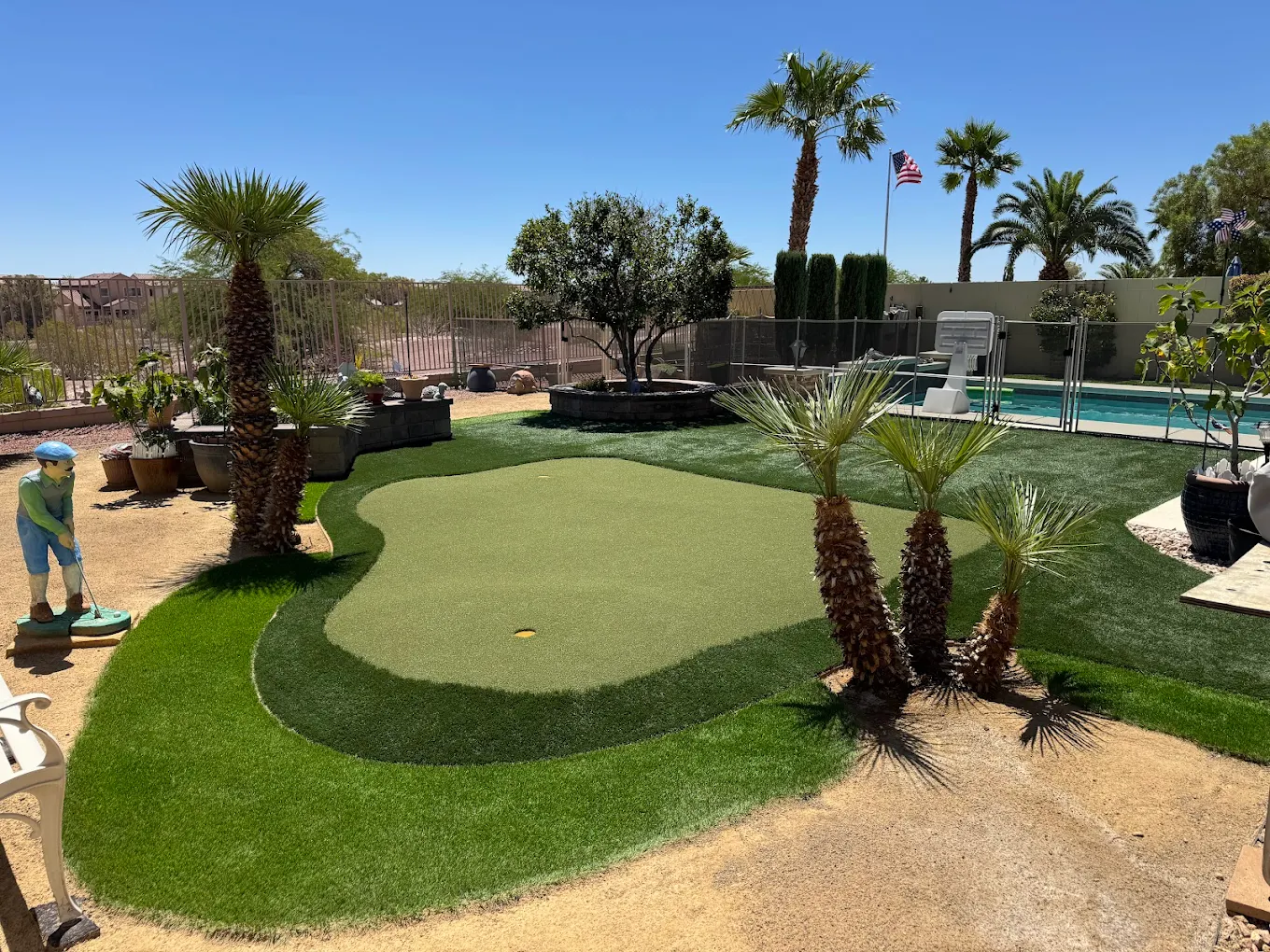
Commercial vs Residential Turf Maintenance
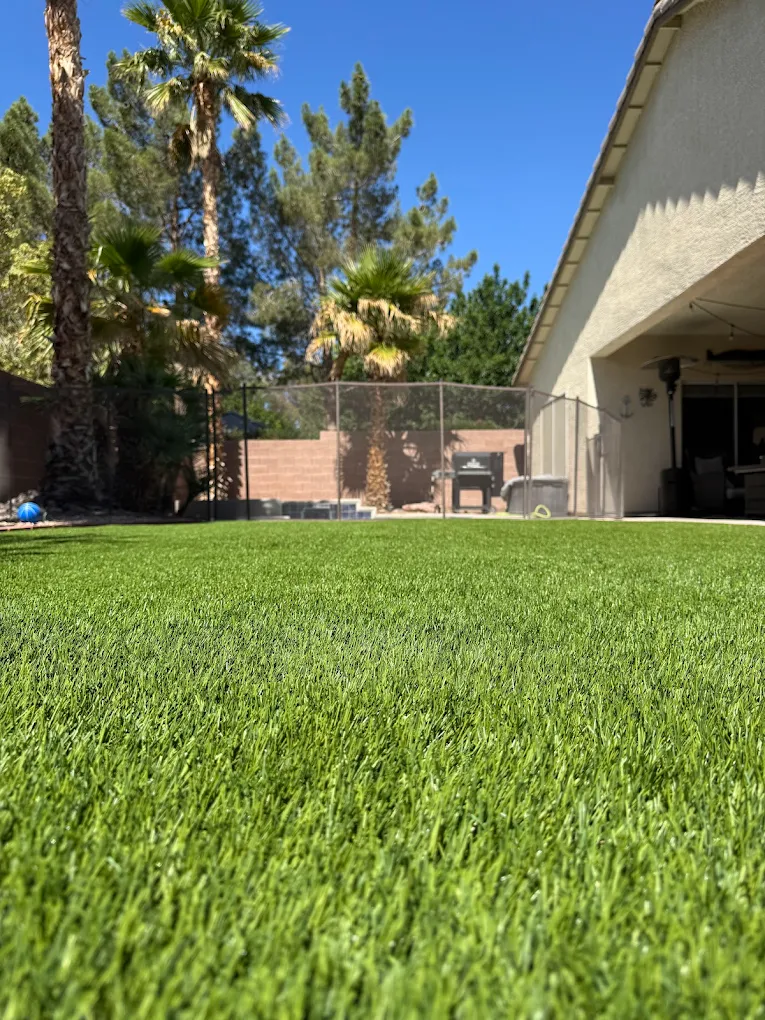
Commercial artificial turf installations face fundamentally different maintenance challenges than residential applications due to usage intensity, liability exposure, and regulatory compliance requirements. A typical residential lawn sees one to five people using it daily for 30 to 90 minutes, while commercial installations like HOA common areas, apartment complexes, and business landscaping experience continuous traffic from dozens to hundreds of users daily. This difference in usage translates directly into accelerated wear patterns, faster contamination buildup, and higher maintenance frequency requirements. Las Vegas commercial properties in areas like Summerlin, Henderson, and the Strip must maintain appearance standards far exceeding residential expectations.
Beyond usage intensity, commercial turf maintenance operates under different regulatory frameworks and liability considerations than residential care. Properties open to the public or serving vulnerable populations like children or elderly residents must meet health department standards, ADA accessibility requirements, and safety certifications that residential installations never face. Insurance carriers increasingly require documented maintenance schedules and professional service records for commercial properties to maintain coverage. The SNWA rebate program that provides three dollars per square foot for turf conversion has driven thousands of commercial installations throughout Las Vegas, creating a large and growing demand for professional maintenance services that understand these unique commercial requirements.
- Higher traffic volume: Commercial turf sees 10 to 50 times more foot traffic than residential, causing faster infill compaction, fiber wear, and contamination accumulation
- Stricter maintenance schedules: Commercial properties require documented maintenance logs, regular service intervals, and emergency response capabilities to maintain appearance and health standards
- Liability concerns: Public access creates slip-and-fall risks, infection control requirements, and potential lawsuits that demand professional-grade maintenance and comprehensive documentation
- Larger surface areas: Commercial installations typically range from 2,000 to 50,000 square feet or more, requiring specialized equipment and bulk product purchasing beyond residential capacity
- Compliance requirements: Health department regulations, ADA standards, insurance mandates, and industry certifications require maintenance approaches that exceed basic residential care
HOA and Apartment Complex Maintenance Schedule
Homeowners associations and apartment complexes represent the largest category of commercial turf installations in Las Vegas, with thousands of properties in Summerlin, Henderson, Green Valley, and Centennial Hills featuring artificial grass in common areas, dog runs, playgrounds, and decorative landscaping. These properties balance resident satisfaction with maintenance costs, requiring schedules that keep turf looking fresh without excessive expense. Most successful HOAs implement tiered maintenance with frequent basic care supplemented by periodic deep cleaning. Weekly debris removal prevents the accumulation of leaves, trash, and organic matter that creates odors and stains in Las Vegas heat.
Bi-weekly sanitizing treatments control bacteria and odors in pet areas and high-traffic zones where residents gather. Monthly deep cleaning addresses infill compaction, embedded contamination, and fiber matting that weekly maintenance cannot fully remedy. Quarterly professional service with specialized equipment rejuvenates infill, extracts deeply embedded contaminants, and identifies developing problems before they require costly repairs. Properties with extensive dog areas may need more frequent professional service, while decorative turf in low-traffic areas can extend intervals. The key is establishing documented schedules that demonstrate proper maintenance to residents, insurance carriers, and potential buyers during property transactions.
- Weekly debris removal: Blow or rake leaves, trash, and organic matter from entire turf surface; hand-pick large debris from dog areas and playgrounds
- Bi-weekly sanitizing: Apply pet-safe enzymatic or antimicrobial treatments to dog runs and high-traffic areas; rinse thoroughly to prevent residue buildup
- Monthly deep cleaning: Power brush infill to relieve compaction; apply professional-grade enzymatic cleaner; extract heavily contaminated areas; inspect drainage and seams
- Quarterly professional service: Deep extraction cleaning; infill rejuvenation or replacement; fiber repair; seam and edge reinforcement; comprehensive inspection and documentation
Dog Park and Pet Facility Cleaning
Commercial dog parks, pet daycare facilities, and veterinary outdoor areas experience the most intensive contamination of any turf application, with dozens to hundreds of dogs using the space daily. These facilities must meet stringent health standards while controlling odors that would be unacceptable in residential or general commercial settings. The Southern Nevada Health District has specific guidelines for commercial pet facilities regarding waste removal, surface sanitization, and pathogen control. Daily solid waste removal is mandatory, with most facilities performing sweeps three to six times daily depending on usage intensity. Liquid waste requires daily rinsing at minimum, with many high-volume facilities hosing turf two to three times daily.
Enzymatic treatments must occur at least three times weekly to keep pace with urine accumulation that would overwhelm weekly residential schedules. Weekly deep cleaning with professional-grade products like URI-CIDE or commercial-strength enzymatic extractors prevents the buildup of uric acid crystals that create permanent odor problems. Monthly infill treatment or replacement keeps ammonia-absorbing materials functioning effectively. Quarterly professional extraction and sanitization meets health department inspection standards. Las Vegas facilities in Henderson, Summerlin, and Spring Valley report that aggressive preventive maintenance costs far less than remediation of severely contaminated turf requiring sections to be replaced. Documentation of all cleaning activities is essential for health inspections and liability protection.
- Solid waste removal minimum three times daily during operating hours; more frequently during peak usage periods
- Liquid waste rinsing at least twice daily; facilities with 20+ dogs should rinse after each play group rotation
- Enzymatic treatment three times weekly minimum; daily application in Las Vegas summer heat when odors intensify
- Professional extraction and sanitization weekly for high-volume facilities; bi-weekly for moderate use
Southern Nevada Health District requires commercial pet facilities to maintain documented cleaning logs, use EPA-registered sanitizers, and pass unannounced inspections. Failure to meet standards can result in citations, fines, or closure orders. Consult with professional turf cleaning services experienced in health department compliance.
Need Professional Turf Cleaning?
Get a free, no-obligation quote for your Las Vegas property. Same-day service available.
Schools and Daycare Facilities
Educational facilities and licensed childcare centers face the strictest maintenance and safety requirements of any commercial turf application. All products used must be non-toxic and approved for use around children, with material safety data sheets on file for inspectors. The turf itself must meet ASTM F1951 safety standards for playground surfacing, with regular testing to ensure impact attenuation values remain within acceptable ranges as infill settles and compacts. Schools throughout Las Vegas including facilities in Summerlin, Henderson, and Paradise must balance maintenance costs against non-negotiable safety and health standards. Daily inspections for hazards like exposed seams, displaced infill, or foreign objects take priority over aesthetic maintenance.
Weekly cleaning focuses on removing organic matter and sanitizing high-touch areas where children sit, play, and potentially put hands in mouths after touching turf. Monthly deep cleaning must use only products certified non-toxic to children, even professional-grade enzymatic cleaners require verification of child safety certifications. Quarterly professional service should include infill depth measurement and redistribution to maintain fall safety standards. Summer break provides ideal timing for intensive cleaning and any necessary repairs without disrupting class schedules. Many Las Vegas schools schedule major turf work during June and July when playground surfaces are empty and extreme heat accelerates drying times for applied treatments.
- ASTM F1951 compliance: Turf must meet playground safety standards for impact attenuation with regular testing to verify infill depth and compaction remain within specification
- Non-toxic product requirements: All cleaning products, sanitizers, and treatments must carry certifications safe for child contact with material safety data sheets available for health inspections
- Daily hazard inspections: Check for exposed seams, displaced infill creating trip hazards, foreign objects, and any damage that could cause injury before children access playground
- Enhanced sanitization: Schools and daycares require more frequent antimicrobial treatment than general commercial properties to prevent disease transmission in high-contact environments
Casino and Resort Turf Maintenance
Las Vegas Strip casinos and resorts demand the highest aesthetic standards of any commercial turf application, with 24-hour appearance requirements that exceed typical business landscaping expectations. Pool deck turf, putting greens, cabana areas, and decorative landscaping must look pristine around the clock for guests paying premium rates and posting photos on social media. These properties employ full-time groundskeeping staff or contract with specialized service providers who respond immediately to spills, stains, or appearance issues. Daily grooming keeps turf fibers upright and uniform. Spot cleaning addresses issues within minutes of discovery rather than waiting for scheduled service. Nightly deep cleaning during low-traffic hours maintains daytime perfection.
Casino and resort turf near pools presents unique challenges from sunscreen, spilled drinks, and chlorinated water exposure that can discolor fibers and create sticky residues. Specialized cleaners designed for these contaminants supplement standard turf maintenance products. Las Vegas properties on the Strip invest heavily in appearance because turf visible in guest photos represents millions of dollars in marketing value. Monthly professional service often includes fiber dyeing or color restoration beyond standard cleaning to maintain the vivid appearance expected in resort environments. While maintenance costs per square foot far exceed typical commercial rates, the return on investment through guest satisfaction and social media exposure justifies the expense for premium properties.
Sports Facilities and Athletic Fields
Athletic turf at schools, parks, training facilities, and sports complexes throughout Las Vegas faces extreme wear from cleated shoes, aggressive directional changes, and concentrated traffic patterns in goal areas and midfield zones. This specialized turf requires maintenance programs focused on performance and safety rather than just appearance. GMax testing measures impact absorption to ensure player safety during falls and collisions, with values that must stay within sport-specific ranges set by governing bodies. Infill management becomes critical as rubber or coated particles migrate toward high-traffic zones, creating thin spots that fail safety testing and accelerate fiber wear.
Grooming equipment designed for sports turf redistributes infill, lifts matted fibers, and removes compacted material that regular brushing cannot address. Las Vegas sports facilities must pay special attention to heat management, as black rubber infill can increase surface temperatures above already extreme ambient conditions when turf reaches 150 to 170 degrees Fahrenheit in summer. Some facilities water turf before practice to reduce surface heat and improve player comfort. Bacterial control becomes essential in sports applications where players have skin abrasions that contact turf, with weekly sanitizing required to prevent MRSA and other infections. Professional maintenance providers experienced in sports turf understand these unique requirements beyond general commercial landscaping maintenance.
Health and Liability Considerations
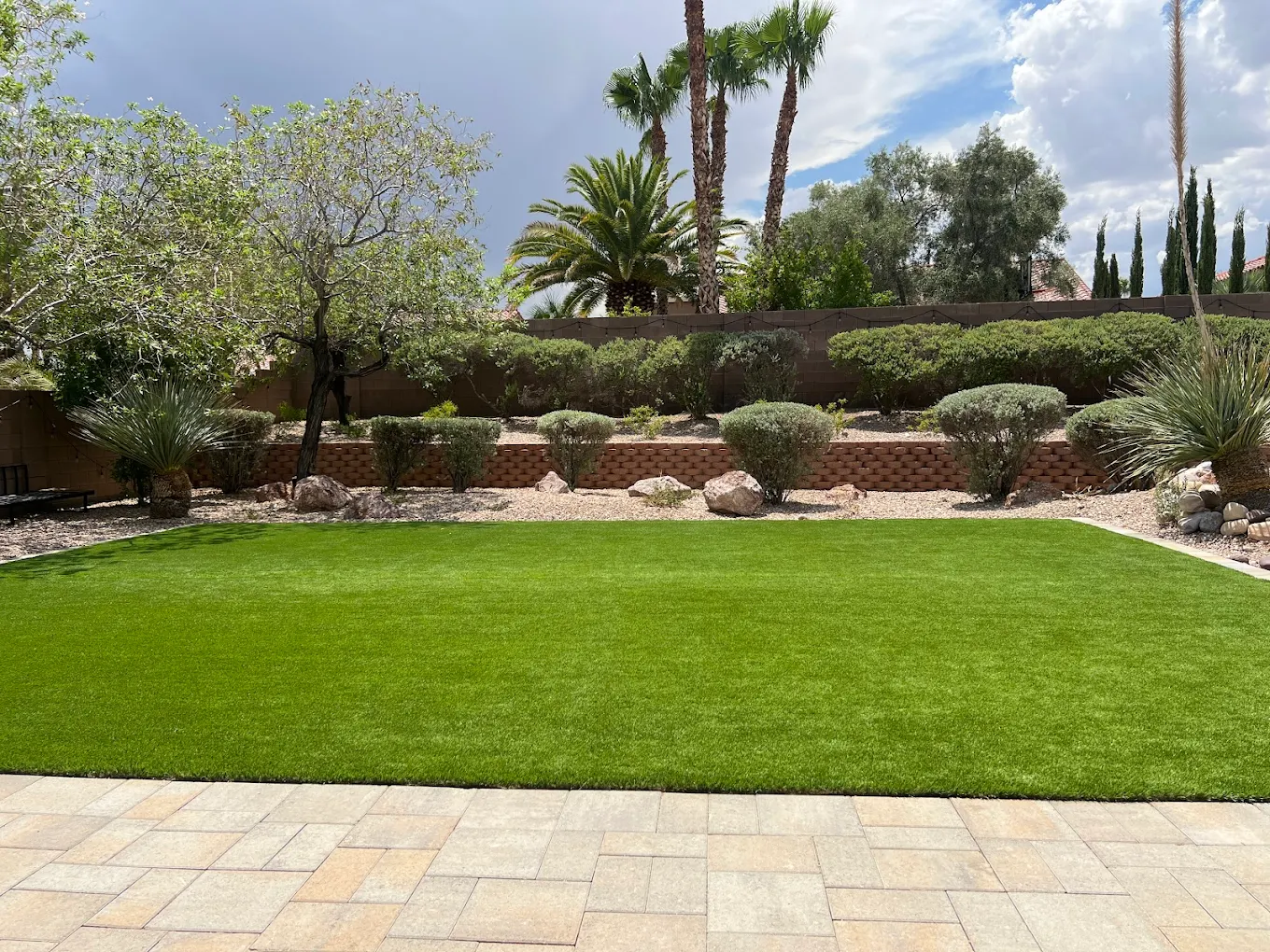
Commercial artificial turf installations create potential liability exposure that residential properties never face, making proper maintenance both a financial decision and a legal necessity. Slip-and-fall accidents on improperly maintained turf can result in lawsuits against property owners, with plaintiffs arguing that inadequate cleaning created hazardous conditions. Bacterial contamination in dog parks or schools can lead to infection outbreaks with associated legal and regulatory consequences. Las Vegas properties must understand that maintenance documentation serves as legal protection, demonstrating reasonable care to prevent foreseeable harm. Insurance carriers increasingly require proof of regular professional maintenance to maintain coverage for commercial turf installations.
Health risks from inadequately maintained commercial turf include bacterial infections from pathogens like E. coli, Salmonella, and MRSA that thrive in warm, contaminated organic matter. Fungal growth in poorly drained or excessively wet turf can cause respiratory issues and skin infections. Chemical exposure from improperly applied or inappropriate cleaning products can harm children, pets, and sensitive individuals. In Las Vegas heat, bacterial growth accelerates and odors intensify faster than in moderate climates, making maintenance failures more consequential. Commercial property managers throughout Summerlin, Henderson, and Green Valley report that comprehensive maintenance programs cost far less than a single lawsuit settlement or health department enforcement action resulting from neglected turf.
- Slip-and-fall liability from improperly maintained turf with displaced infill, worn fibers, or contaminant buildup creating hazardous walking surfaces
- Infection risk from bacterial contamination in pet areas, playgrounds, and sports facilities where users have skin contact with turf
- Regulatory compliance failures when schools, daycares, or pet facilities fail health inspections due to inadequate cleaning and sanitization
- Insurance coverage issues when carriers discover lack of documented maintenance or professional service records during claims investigation
- Reputation damage from negative reviews, social media posts, or news coverage of health incidents traced to poorly maintained commercial turf
In-House vs Professional Service Cost Comparison
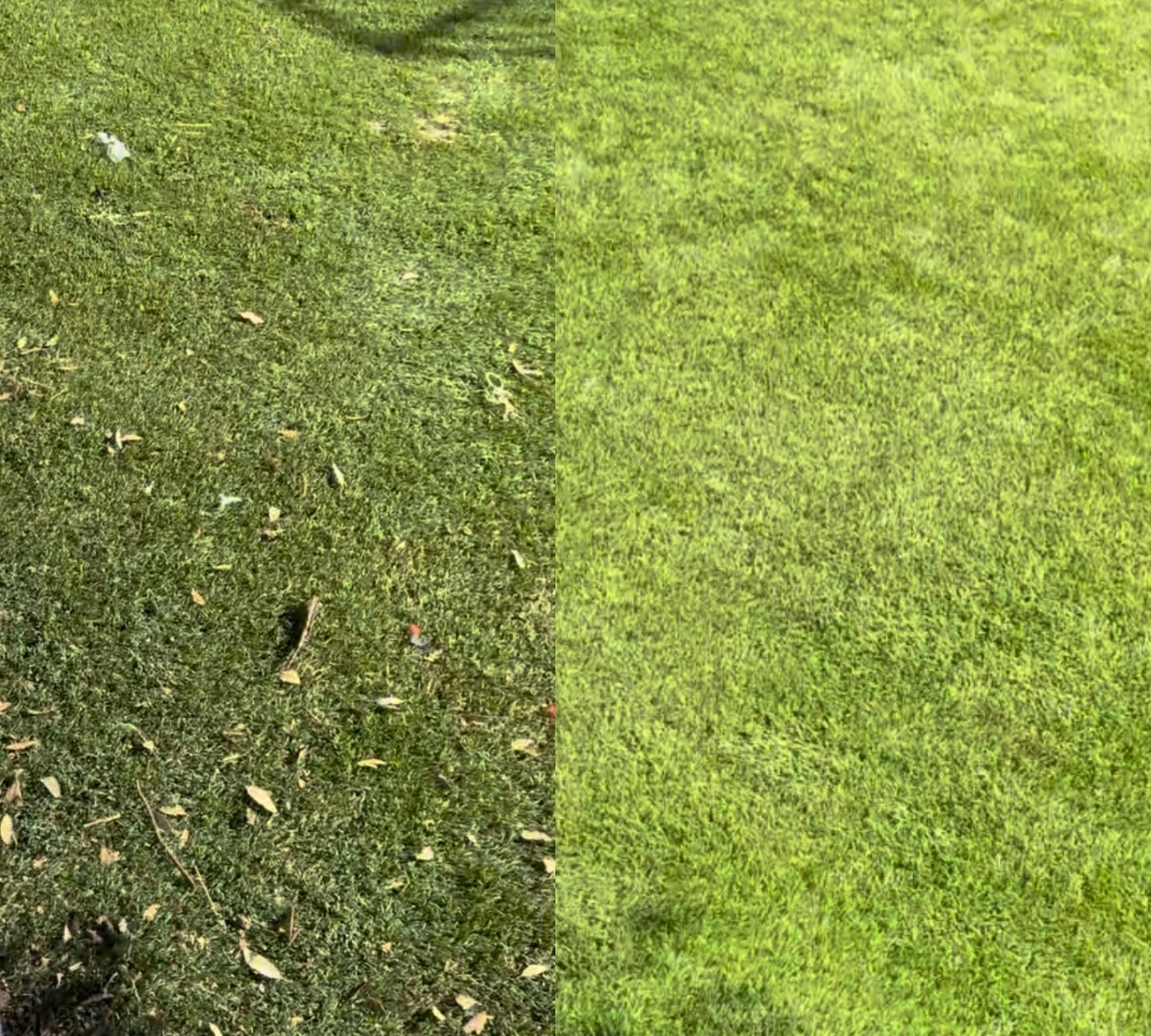
Commercial properties must decide whether to maintain turf with in-house staff or contract professional services, each approach offering distinct advantages and cost structures. In-house maintenance requires purchasing equipment (backpack blowers, power brooms, extraction machines), storing cleaning products in bulk quantities, and training staff on proper techniques and safety protocols. For small installations under 2,000 square feet, in-house maintenance may cost less when labor is already available for other property tasks. However, equipment depreciation, product waste from improper storage in Las Vegas heat, and inefficiency from untrained staff often make true costs higher than anticipated.
Professional turf cleaning services bring specialized equipment, bulk product purchasing power, trained technicians, and liability insurance that protects the property owner. Services typically charge thirty-five cents to one dollar twenty-five cents per square foot for monthly maintenance depending on contamination level and property location. For a 5,000 square foot HOA common area, professional monthly service costs approximately $350 to $750 compared to estimated in-house costs of $200 to $400 monthly when amortizing equipment, products, labor, and training. The break-even point typically occurs around 8,000 to 12,000 square feet of turf, below which professional service proves more cost-effective. Properties in Henderson, Summerlin, and Green Valley increasingly choose professional maintenance to ensure consistent results and transferable liability.
- Small properties under 2,000 square feet: In-house spot cleaning with monthly professional deep service often most economical
- Medium properties 2,000 to 8,000 square feet: Bi-weekly professional service typically costs less than maintaining in-house capability when factoring equipment and training
- Large properties over 8,000 square feet: Dedicated in-house maintenance staff with professional quarterly service may offer savings if labor already exists for other duties
- High-contamination facilities: Dog parks, pet facilities, and heavily used athletic fields almost always benefit from professional service regardless of size
The break-even point for in-house versus professional maintenance is typically 8,000 to 12,000 square feet of turf when accounting for equipment costs ($3,000 to $8,000), product expenses ($50 to $200 monthly), labor (4 to 8 hours monthly), training, and liability insurance. Most commercial properties under this threshold achieve better results at lower total cost with professional service.
Vendor Selection Checklist
Choosing the right professional turf maintenance provider requires evaluating qualifications beyond basic price quotes, as the cheapest service rarely delivers the quality, reliability, and liability protection commercial properties need. Las Vegas commercial property managers should request detailed proposals outlining service frequency, specific tasks performed, products used, and response time for emergency calls. Vendors should provide proof of liability insurance with coverage limits appropriate to the property size and use, typically one million to two million dollars minimum. References from similar commercial properties verify consistent performance and professional conduct beyond marketing claims.
Equipment quality indicates a vendor's capability to handle commercial requirements versus residential-focused companies scaling up beyond their expertise. Professional commercial turf services invest in truck-mounted extraction systems, commercial-grade power brooms, and bulk product delivery systems rather than residential-grade equipment. Certifications from turf manufacturers or industry organizations demonstrate training and commitment to best practices. Service agreements should specify response times for scheduled and emergency service, detailed scope of work for each service level, and clear pricing for additional services beyond the base contract. Vague proposals or resistance to detailed specifications often indicate vendors unprepared for commercial demands.
- Proof of liability insurance with minimum one million dollars coverage; two million preferred for large properties or high-risk applications like playgrounds and dog parks
- Commercial references from similar property types with verifiable contact information and permission to discuss service quality and reliability
- Detailed service proposals specifying exact tasks performed at each frequency level with products listed by name and concentration rather than vague "professional cleaners"
- Commercial-grade equipment including truck-mounted extraction systems rated for 5,000+ square feet daily versus residential portable units
- Industry certifications from turf manufacturers, cleaning associations, or specific training programs demonstrating expertise beyond general janitorial services
- Clear pricing structure separating base service costs from additional charges for extraction, repairs, emergency calls, and product upgrades
- Service agreements guaranteeing response times for scheduled maintenance and emergency calls with penalties for missed appointments
- Documentation protocols providing written service reports, before/after photos, and compliance logs suitable for health inspections and insurance requirements
Investing in Professional Commercial Turf Care
Commercial artificial turf represents a significant investment for Las Vegas properties, with installation costs ranging from three to seven dollars per square foot and total projects often exceeding $15,000 to $100,000 or more for larger facilities. Protecting this investment through proper maintenance extends turf lifespan from the typical eight to twelve years to fifteen years or more, delivering hundreds of thousands of dollars in value over the life of the installation. Neglected turf deteriorates rapidly in Las Vegas heat, with contamination and wear patterns that often require replacement within five to seven years. The difference in maintenance cost between proper care and neglect is $500 to $2,000 annually for typical commercial properties, while early replacement costs $10,000 to $50,000 or more.
Beyond financial considerations, professional maintenance protects property owners from liability exposure, regulatory violations, and reputation damage that can far exceed direct costs. Las Vegas commercial properties throughout Summerlin, Henderson, Green Valley, and Centennial Hills increasingly view turf maintenance as essential risk management rather than discretionary landscaping expense. The SNWA rebate program continues to drive new commercial installations, with over 70 million square feet of turf installed valley-wide. As this installed base ages, demand for professional commercial maintenance services will continue growing. Properties that invest in proper maintenance from installation day forward protect their investment, ensure safety and compliance, and maintain the aesthetic appeal that made artificial turf attractive initially.